

Happy Easter! I hope everyone had a chance to get away for at least a few days this past quarter.
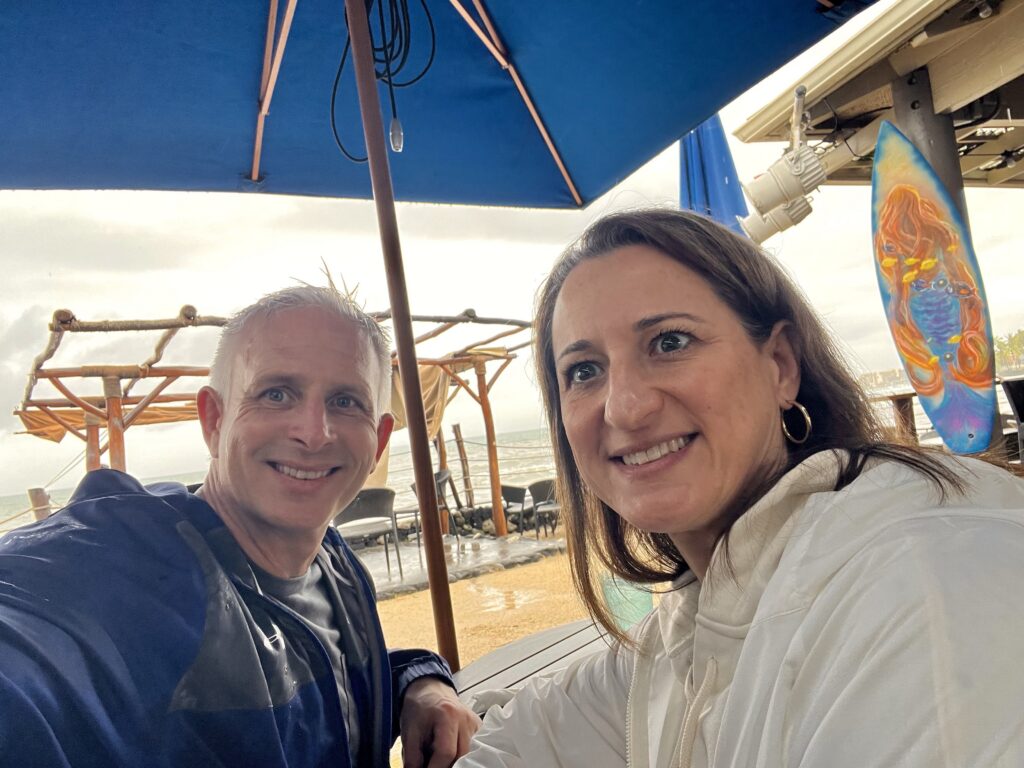
Kristy and I did exactly that and escaped to Hawaii — a plan that, on paper, felt like a guaranteed win. Sun, ocean, a break from routine. The kind of trip you don’t overthink.
Unfortunately, we managed to arrive just in time for the tail end of a hurricane.
I’ve been to a lot of resorts over the years, but I can honestly say I’ve never seen so many unhappy faces concentrated in one place. Lower floors flooded, people pacing the lobby, staring at grey skies, refreshing weather apps like they might personally negotiate with the storm. The collective disappointment was impressive.
And yet, oddly, it made the whole experience better.
There’s something about shared misery that takes the edge off your own. It’s hard to feel uniquely unlucky when everyone is in the same situation. Expectations reset, humour creeps back in, and the whole thing becomes a little more manageable. By the second day, people were laughing about it. Strangers bonding over cancelled excursions and sideways rain.
Misery, as they say, loves company.

Markets lately have felt a lot like that resort.
This has been an undeniably difficult stretch. Volatility has picked up, confidence has been tested, and there’s no shortage of headlines reminding us of everything that could go wrong.
Geopolitical risk has moved from background noise to a primary driver. Conflict in the Middle East and the resulting disruption to energy supply has pushed oil sharply higher, feeding directly into inflation expectations, interest rates, and sentiment.
Central banks are back in a position they hate — forced to choose which problem they’re willing to tolerate. Higher energy prices push inflation up while slowing growth. Short term spikes are manageable. It’s persistence that creates real economic damage.
History is pretty clear on that point: prolonged energy shocks tend to slow growth and, in many cases, tip economies toward recession.
Bond and credit markets are reflecting this uncertainty. And there are pressure points — private credit, parts of technology — that could amplify weakness if conditions deteriorate further.
But context matters.
The economy didn’t enter this period in a fragile state. It came in with solid balance sheets, steady earnings, and continued investment driven by AI and productivity gains. That doesn’t eliminate risk, but it does provide a foundation.
What stands out most isn’t just what’s happening — it’s how markets are reacting.
At almost any other point in my career, several of the events we’ve seen over the past year would have triggered a much sharper selloff.
Instead, we’re roughly 10% off the peak — a correction, but a relatively contained one given the backdrop.
That doesn’t mean everything is fine. There is real economic risk here. It does mean markets are proving more resilient than the headlines would suggest.
And just like that storm in Hawaii, we’re not going through it alone.
Every investor is navigating the same environment. That doesn’t remove uncertainty, but it does normalize it. Markets don’t single people out — they just test how much discomfort you’re willing to tolerate.
On the home front, we’ve had a different kind of “storm” — one I’m still trying to process.
Last quarter I mentioned Jacob and Gabi are expecting. I hadn’t even adjusted to that when Maddie and Joel decided to pile on — they’re expecting as well.
So, I’ve gone from “future grandparent” to “bulk order.”
I haven’t adjusted to one, and now I’m preparing for two.
Kristy, on the other hand, has adapted immediately.
They say you can’t relive your past, but she’s giving it a very good attempt. There is already a fully operational nursery in our house — before our kids have even finished theirs.
This “having a baby” version looks nothing like the first time around. We started with hand-me-downs and garage sale strollers.
This time, we’re buying new.
At one point I thought we had already bought the baby a car. Turns out it was just a stroller — but I’m fairly sure it has more features than my first vehicle and cost just about the same!
I’m starting to realize that grandchildren are less of a milestone and more of a long-term financial commitment. I may need to start factoring “grandparent inflation” into retirement planning.
From a market perspective, there is a lot going on right now — and for once, it’s not just noise.
.
But a 10% pullback isn’t a reason to overhaul a long-term strategy.
Nobody rushes into a store because something is 10% off. If you were already buying, you appreciate the discount — but you don’t change your plan because of it.
Markets are no different.
We’re not making significant allocation changes here. The fundamentals, while pressured, haven’t broken. If markets disconnect further from underlying value, we’ll take advantage of it. That’s when opportunity shows up.
For now, patience matters more than activity.
Sitting in that resort in Hawaii, watching the storm roll through, there wasn’t anything we could do but wait it out. In due course the clouds cleared — and we even eventually got our sunset.
Markets work the same way.
The storm always feels personal when you’re in it. It never is. Periods like this are uncomfortable, sometimes prolonged, but they are also temporary.
In the meantime, we stay disciplined, stay patient — and accept that discomfort is the price of long-term returns.
And if that doesn’t help… just remind yourself it could be worse — you could be budgeting for two grandchildren at the same time!
Jeremy




leave a comment